

s
Product ID: 48813118
Desertcart purchases this item on your behalf and handles shipping, customs, and support to Cape Verde.
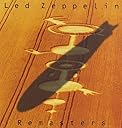
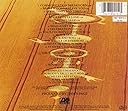
One of the few truly bigger-than-life rock bands, Led Zeppelin continues to cast a giant shadow over contemporary rock two decades after the group's break-up. The slickly packaged set offers a solid introduction to the band's work, with two discs of remastered, sonically upgraded album tracks, plus a third disc of interviews with surviving band members Jimmy Page, Robert Plant and John Paul Jones. Hearing all these Zep classics--"Stairway to Heaven", "Whole Lotta Love", "Dazed and Confused", "Rock and Roll", "Kashmir", "Immigrant Song", "Black Dog" "Good Times Bad Times", "Heartbreaker", "Houses of the Holy" and "The Song Remains the Same"--assembled in one package is an impressive testament to the group's pervasive influence. --Scott Schinder Led Zeppelin - Remasters - CD Set Review: Cd - As described great cd Review: It's Only Rock And Roll, But I Like It 😊 - I had a great number of classmates listening to rock music when we were at primary school and one of them who wanted me to get some ideas of really cool stuff lent me Led Zeppelin I on a Friday. I thought I could give it a try and when I listened to it, I never listened to any other tapes all weekend long. On Monday I asked my friend whether he could tape some kind of a compilation of his Led Zeppelin albums and he said yes. For some reason he chose about the same songs as Jimmy Page when he made the decision to select the Zepps' most important hits for Remasters in 1990. I clearly remember Black Dog, Immigrant Song, No Quarter, How Many More Times, Moby Dick, Communication Breakdown, Heartbreaker, Whola Lotta Love, Good Times Bad Times and Rock And Roll were on that Phillips tape. Naturally, I bought the albums later and when I also got the Zepp movie The Songs Remains The Same, I was just blown away. When Robert and Jimmy reunited to go on tour and release Unledded/No Quarter, fortunately, I could see their gig in Budapest, Hungary. I think Remasters is an excellent compilation of their greatest hits and it can help you to relive the magic that Zeppelin was. Enjoy and turn up the volume, it doesn't matter what the neighbours say!
| Asin | B000026C3T |
| Is Discontinued By Manufacturer | No |
| Label | Rhino |
| Manufacturer | Rhino |
| Manufacturer Reference | 780415 |
| Number Of Discs | 2 |
| Original Release Date | 1997 |
| Product Dimensions | 14.3 x 12.6 x 0.99 cm; 111.98 g |
N**Y
Cd
As described great cd
G**I
It's Only Rock And Roll, But I Like It 😊
I had a great number of classmates listening to rock music when we were at primary school and one of them who wanted me to get some ideas of really cool stuff lent me Led Zeppelin I on a Friday. I thought I could give it a try and when I listened to it, I never listened to any other tapes all weekend long. On Monday I asked my friend whether he could tape some kind of a compilation of his Led Zeppelin albums and he said yes. For some reason he chose about the same songs as Jimmy Page when he made the decision to select the Zepps' most important hits for Remasters in 1990. I clearly remember Black Dog, Immigrant Song, No Quarter, How Many More Times, Moby Dick, Communication Breakdown, Heartbreaker, Whola Lotta Love, Good Times Bad Times and Rock And Roll were on that Phillips tape. Naturally, I bought the albums later and when I also got the Zepp movie The Songs Remains The Same, I was just blown away. When Robert and Jimmy reunited to go on tour and release Unledded/No Quarter, fortunately, I could see their gig in Budapest, Hungary. I think Remasters is an excellent compilation of their greatest hits and it can help you to relive the magic that Zeppelin was. Enjoy and turn up the volume, it doesn't matter what the neighbours say!
N**T
A Must Have - Great Value
Nearly all the classic Led Zeppelin Album Tracks on a double CD set Jimmy Page personally remastered this edition from the original studio tapes after the poor quality of the first Atlantic CD issues of the original analogue Led Zep Albums As the studio masters had a poor dynamic range, some noise, and some distortion, this two CD set may be the optimum way to own Classic Led Zep as Digital Audio Jimmy page has now remastered The early Led Zep Albums as 96KHz 24Bit if you want those. This two CD set is a must have for any Led Zeppelin Fan
J**A
This Is A Great Best Of Led Zeppelin
I Like The Track Listing On This 2cd Set
P**T
Perfect
Great album
R**R
Probably the only zeppelin album you need!
I bought this a while ago now and not really heard much zep except the obvious that make it on radio. So I was very pleasantly surprised when Saturday pm I decided to play it through. Not only is it brilliant but as many have already said you get a ready made collection! What ever is missing I can live without. Already turned collector maniac with 10cc, Floyd and whitesnake! The latter being my favourite best band ever! Anyway I knew more tracks than I thought. There's nothing I can say that a fan won't already know. So I will just compliment the sound and track order. There's also the fact that once you start listening to this you will play it loud and always play all the way through! So send her shopping, mow the neighbours lawns and sit back and enjoy.
D**D
Excellent
Excellent it's great
A**Y
onlyme
This nostalgia business is worth a lot of money it is the main reason I bought 90% of my recent purchases and this is no different I find this type of record best when out driving as you can sing along without thinking ,this means what is left of your brain is more than adequate for driving
L**E
Good music
Nice music! Happy with choice
S**E
Satisfait de mon achat
Excellent
F**.
Fine by me
5/31/22 Based on comments on various Zepp CD and LP releases, this CD-set might not be the ultimate, but when played through my Topping D10-S, it's plenty good for me, and I hated CDs until about 2016, when affordable CD-playback in general finally started to sound good. The cymbals are as clean as anything I've heard on ANY recording (you can even hear the brassy shimmering), at least where it matters. There is some grunge from the analog master in some loud passages, but it doesn't bother me. Hopefully, the following information will help some readers to overcome the disinformation which has been spewed about various aspects of digital audio since its inception, just to make money, which has led many to give up on digital audio. I gave up on CDs for over a decade due to the belief that "CD sound" (a subtle but irritating artificiality and sheen) was inherent to CDs, which was based on my experience with CDs, and the fact that some high-end reviewers used the term "CD sound." They should have known better, with their access to cost-no-object DACs and CD-players. But according to undeniable, trustworthy experts, such as Goldman Labs (famous for their $300K turntables) and Dr. Aix (famous for his high-res recordings), CDs themselves have the potential to sound at least as good as any format. However, early brick-wall anti-aliasing filters on 44.1 kHz non-oversampling decks caused a dry/smeared high end and mediocre spaciousness/imaging (which can be heard very easily in the cymbals on the Herbie Hancock Quartet CD, a jazz standard which is otherwise fantastic) until they were replaced by Apogee's 924 and 944 aftermarket filters, starting in about September of 1985. Eventually, the early digital recordings made with non-oversampling decks with lousy input filters were replaced, if there were analog masters, by recordings made with clean digital recorders, although not necessarily from clean analog masters. Recordings which were recorded directly to digital with lousy input filters, without also recording directly to analog just in case digital turned out to have problems, obviously can't be fixed. So, the "perfect sound forever" mantra took a toll. Non-oversampling decks with a sampling rate of 48 kHz or higher had good phase linearity even before Apogee filters became available. The 3M system had a 50 kHz sampling rate and replayed its recordings through the DACs used as part of the ADCs, giving it perfect net amplitude-linearity and legendary sound quality. But the recordings had to be recorded and played on the same deck for the best sound quality, which isn't the best approach for long-term archiving, especially since the 3M's reliability left something to be desired. In about 2006, asynchronous sample-rate converters (ASRCs) were introduced, and it became possible to make 44.1 kHz recordings from 48 kHz recordings, and from very early digital recordings with a variety of sampling-rates, without converting to analog and then back to digital, and without adding significant distortion. There were earlier SRCs which could convert between certain sampling-rates, but clearly they weren't satisfactory in all cases. 16-bit oversampling decks, which use sigma-delta ADCs, a.k.a. "1-bit" ADCs, referring to the pulse-density-modulated (PDM) carrier at the output of the modulator stage, have been available commercially since 1982 (JVC's stereo ADC, the VP-900). Sony's 24-channel oversampling deck, the PCM 3324, was introduced in 1984 and became the industry standard (it would have been introduced in 1981, but was delayed for three years by the industry's need to edit by physically cutting and splicing the tape, which required Sony to devise a complex encoding scheme). A few years later, the PCM 3348, which put 48 tracks on a half-inch tape, was introduced. The main advantages of oversampling converters is that a) their high sampling rate allows them to use simple, low-distortion input filters with a linear phase response in the audio range; b) they're inherently linear to the specified number of bits; and c) they can provide perfect channel-matching, because the channel-characteristics are determined by a digital process, which is identical for each channel. When the PCM is converted back to analog with a sigma-delta DAC, it's first converted back to high-frequency, high-resolution PDM, to avoid the need for brick-wall output filters. The loss incurred by converting between PDM and PCM is insignificant, although it should be kept to a minimum. If you need more detail, there are plenty of online explanations. So, there have been excellent digital decks suitable for dubbing analog masters (stereo or multi-track) to 16-bit digital since the dawn of the digital era, and there are indications that some groups secretly did so in order to preserve their master recordings, but that they reserve such recordings for release on LPs to retain control over them, since they could be copied perfectly if they were put on CDs. (Software is stored on CDs, and it can't have a single bit-error. Software does have an extra layer of error-correction, but it's rarely needed.) These groups make their CDs from inferior masters, such as old analog masters which have been used a lot, or masters with an inferior mix. As much as I'd like to check out some LPs, I refuse to get back into vinyl, because it's too expensive and inconvenient. However, it appears that CD-players were deliberately crippled with "CD sound" (a subtle but irritating artificiality and sheen) to keep selling us bogus "solutions" year after year, until the CD's reputation was almost destroyed and CD-sales began to tank. In 1984, Dr. Roger Lagadec identified its cause as pre-ringing, a.k.a. "pre-echo" or "dispersion," related to passband-ripple in the digital interpolation filters (DIFs) on DAC-chips, and provided solutions (for details, see Julian Dunn's online paper on anti-aliasing filters). (High-res FLACs don't require as much interpolation as CDs, perhaps partly explaining their reputation for superior sound quality.) Yamaha apparently took Dr. Lagadec seriously, and used external digital filters in their 1980s line of "natural sound" CD-players, which included one in the $400 range as I recall, and which I learned decades later had good sound quality. (External digital filters were high-performance DIFs on separate chips, which are rarely used these days even in high-end players, due to advancements in the DIFs on DAC-chips.) However, there was apparently a cover-up to prevent as many people as possible from learning the actual cause of "CD sound," and that the audio-gear industry could have eliminated it if it wanted to do so. This cover-up apparently included audio reviewers and even Yamaha, whose ads attributed "natural sound" to the use of short signal paths, which has always been a common design practice. After reading this ad, I dismissed "natural sound" as an ad slogan and Yamaha as overpriced Japanese junk. I gave up on CDs from 2004-2016 due to my belief that "CD sound" was inherent to CDs, and then accidentally listened closely to a CD of Beethoven's 9th being played on KUAT, and realized that there was no "CD sound." So, I investigated, and found an article by Robert Harley of the Absolute Sound which mentioned that CD-sound had been eliminated by tweaking the DIFs on DAC-chips, and that it constituted a revolution in CD-playback. So, in 2018, I gambled $100 on a lossless player with Sabre 9018 DAC-chips, which amazed me. A couple of years later, I got an upgraded version with 9028's, and a few months later, a D10-S, which uses 9038's. Although I'm satisfied with the D10-S, the best DACs cost at least $1K. Now that the problems with CD-playback are history, the only thing holding CDs back is the quality of the analog signal fed into the digital recorder, but that's not a significant issue with the Remasters CDs.
オ**ン
Led Zeppelinでは一番のベスト盤でしょう!
Led Zeppelin入門用としてもリアルタイム世代のファンにもオススメな2枚組ベストアルバムです! Rain Songの入ってないMothershipよりは断然こっちが良いと思いますよ👍♪
F**R
Un clásico para disfrutar
Una agrupación legendaria, unas canciones memorables y un buen sistema de sonido para disfrutar a todo volumen tumbado en un buen sillón de principio a fin,
Trustpilot
1 month ago
3 weeks ago